
Wooden decks in the Caribbean: a guide to starting right
Deck, timber terrace, decking… three words for the same wish: real wood underfoot that stands up to the Caribbean climate. Before you start, four questions deserve a real answer.
The short answer
A deck is a wooden terrace built on a frame (joists, pedestals or stilts). In the Caribbean, the wood must be fit for Use Class 4 (UC4) and resist termites. We work with Accoya® — €110 incl. tax per m² in Color Grey — sold by the m² and installed by our teams in Guadeloupe and Martinique.
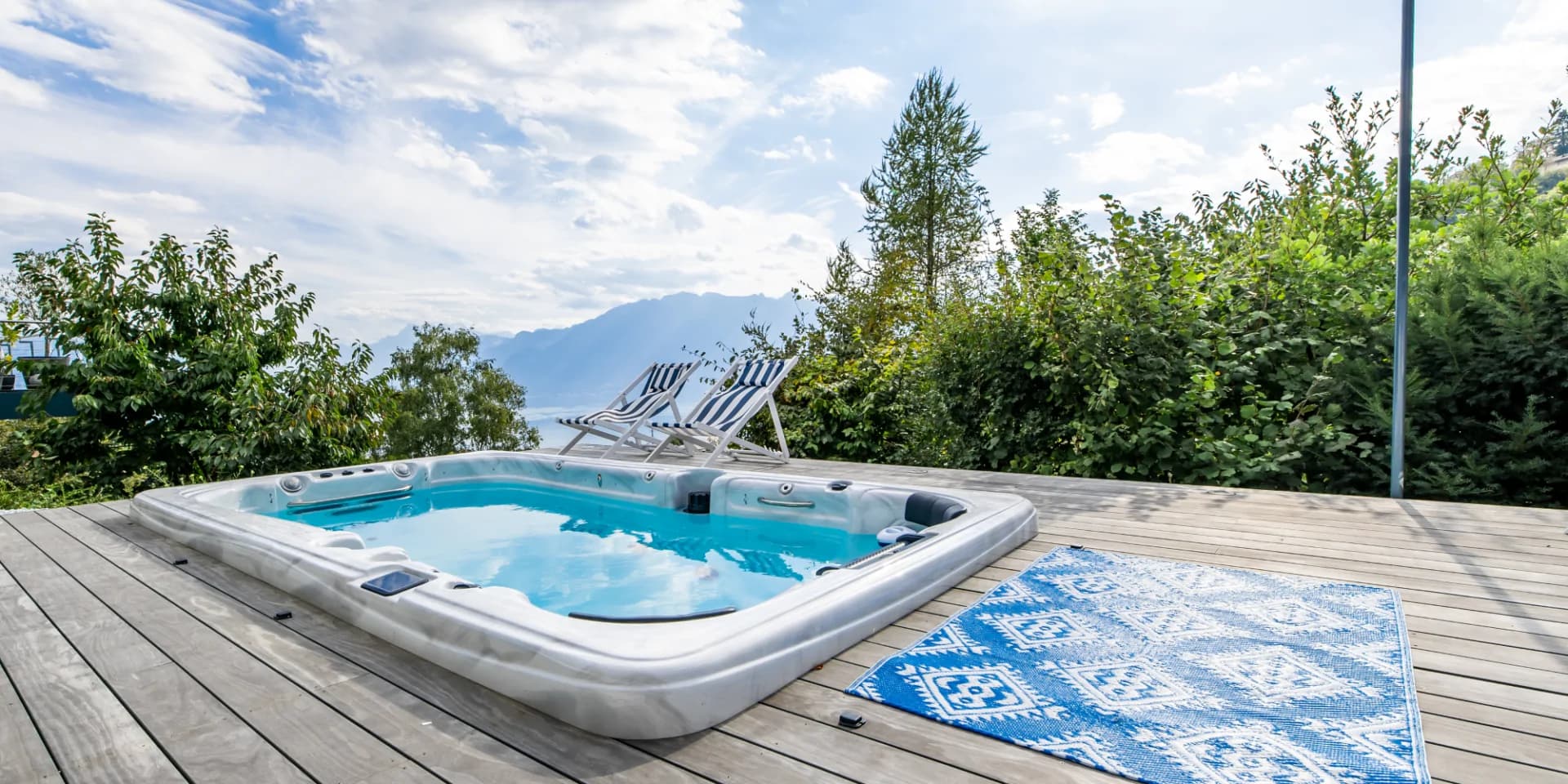
Deck, timber terrace, decking: what are we talking about?
In the Caribbean, the word “deck” has taken over conversations, villa listings and hotel briefs. It means the same thing as a wooden terrace: an outdoor floor made of boards, screwed onto a frame. “Decking” is the trade term for the board surface itself. Three words, one object — and the same technical demands.
What really changes from one project to the next is the frame: joists on an existing slab, adjustable pedestals on stabilised ground, or a stilted structure when the land slopes. The frame decides how long the deck lasts — far more than the beauty of the boards on top.
The unforgiving decision: choosing the wood
Near-daily rain part of the year, harsh sun, sea spray on the coast, and termites active twelve months out of twelve: a Caribbean deck lives in extreme conditions. The local rule of thumb is well known — “you need class 4 wood”. In standards language, that is Use Class 4 (UC4, EN 335): wood fit for ground and freshwater contact. Pressure-treated pine gets there through chemical impregnation; Accoya® gets there by nature, through acetylation, with no biocide — we compare them in our materials guide.
- Use Class 4 (UC4): the level the Caribbean outdoors demands
- Resistance to termites and wood-boring insects, with no added biocide
- Dimensional stability: boards that stay straight through rain/sun cycles
- Barefoot comfort at high noon, and a written manufacturer warranty
Pool decks: the details that matter
The pool surround is the most demanding deck of all: water splashes all year, permanent bare feet, direct sun. Three details make the difference. Ventilation under the decking and ground clearance, so the wood dries between showers. Marine-grade stainless-steel screws that don’t stain the wood. And the board profile: slip resistance depends on the profile, the finish and installation details — something we settle at design stage, not afterwards. Our project gallery shows several Accoya pool decks.
Install it yourself, or have it installed?
Both are legitimate. If you install yourself or with your carpenter, our Accoya boards can be ordered online by the m² — the calculator adds the recommended 10% for offcuts, pick-up is free at our depots in Saint-François (Guadeloupe) and Les Trois-Îlets (Martinique), and delivery is a €90 flat fee up to 20 m². If you would rather hand over the project, our teams design and install to the manufacturer’s specifications — properly sized joists, at least 200 mm of ground clearance, ventilation — with warranties set out in writing on the quote. The site visit is free on both islands.
What it costs
The material has a public price: €110 incl. tax per m² in Accoya Color Grey, whatever the board size, 8.5% VAT included. Installation depends on the base, the height and access — it is priced by quotation, after a site visit. We published a transparent pricing guide that walks through the maths, worked example included.
Related questions
What is the difference between a deck and a wooden terrace?
None, really: “deck” is simply the everyday word in the Caribbean for a wooden terrace on a frame. The technical requirements — Use Class 4 (UC4) wood, a ventilated frame, stainless-steel screws — are the same.
Which decking wood best resists termites?
A wood fit for Use Class 4 (UC4). Accoya, a solid acetylated wood, is no longer “edible” for termites and wood-boring insects, with no added biocide — and its manufacturer backs it in writing for up to 50 years above ground, subject to installation conditions.
Can a deck be installed around a saltwater pool?
Yes. The points to watch are the screws — marine-grade stainless steel — ventilation under the decking, and an occasional rinse with fresh water. The board profile and installation details settle the slip question; we cover it during the site visit.
Do you build decks in Saint-Martin and Saint-Barthélemy?
Yes, on quotation: boards are delivered by freight (priced within 48 working hours) and projects are arranged case by case, for villas and professionals alike.